In this episode, we breakdown how to scale enablement, operationalize strategy, and support 13,000+ reps with clarity and confidence.
Meet our Guest
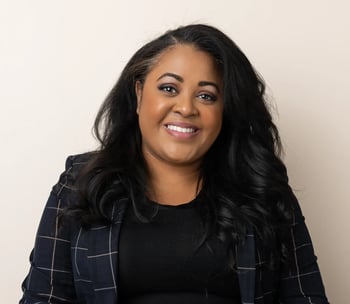
Ashtonis a Director of SMB Enablement at Salesforce. With Deep roots in frontline sales and a track record leading enablement in high-growth companies like Slack, Ashton brings a rare blend of operational muscle and strategic clarity to enterprise SaaS.
This is the story of how Ashton moved from tactical execution to cross-functional strategy — and what it really takes to align 13,000 reps to a single vision.
✅ Start with Scale: If you to do it for 1000 more reps, what would you do differently?
✅ Think like a seller: Treat enablement launches like enterprise sales deals.
✅ Build for now and next: Balance in-quarter wins with long-term strategic readiness.
Operationalizing Enablement
Background context: When Ashton Williams transitioned from rep to enablement leader, she brought more than just empathy. She brought urgency. At Salesforce, she leads a team that supports a massive, matrix-styled organization. She’s learned that in environments like this, being reactive isn't enough. You need frameworks, you need buy-in, and you must think at scale.
Key Insight #1: Scale forces strategy
Ashton’s advice for enablement pros stuck in the weeds: pretend you need to do it for 1,000 more reps.
That mindset shift forces you to prioritize, streamline, and think beyond quick fixes. Instead of getting pulled into endless frontline requests, Ashton encourages enablers to articulate trade-offs and risks — and advocate for forward-looking priorities, even when it's unpopular.
🎤 “Scale really forces you to think about strategy. You just don't have the option to be reactive anymore.” - Ashton Williams
Key Insight #2: Prioritization is a risk plan
In a complex organization like Salesforce, where priorities cascade from global, regional, and segment layers, Ashton uses a 3-part filter:
This approach helps her team confidently say no — and explain the reasoning behind it.
🎤 “We don’t burn down the door and forget the house. We balance the quarter’s urgency with multi-year foundations.”"- Ashton Williams
Key Insight #3: Enablement in enterprise sales
When launching a program, Ashton doesn’t just build content. She builds buy-in. That means:
• Identifying champions and decision-makers • Soft-launching initiatives with informal stakeholder feedback • Assigning clear roles and responsibilities across cross-functional teams
She even forms councils — advisory groups of reps and partners — to maintain relevance, drive momentum, and surface risks early.
🎤 “Just because you're a team of one doesn't mean the work is done by one person.”— Merav Ammar
The Problem: Enablement often stops at onboarding. It's focused on quick wins, product launches, and the sales team's immediate needs. But in a company like Salesforce, where reps, managers, and functions span the entire customer lifecycle, tactical training alone doesn't work.
The Solution:
Align programs to the business's strategic bets, not just training request.
Anchor every enablement initiative to three pillars: Reach, Readiness, and Results.
Assign clear ownership for each success metric.
Build proactive feedback loops through field councils and stakeholder check-ins.
Continuously balance in-quarter execution with long-term agility.
🎤 “A launch can be great and a project can still fail. You need health checks to know what’s actually working."— Ashton Williams
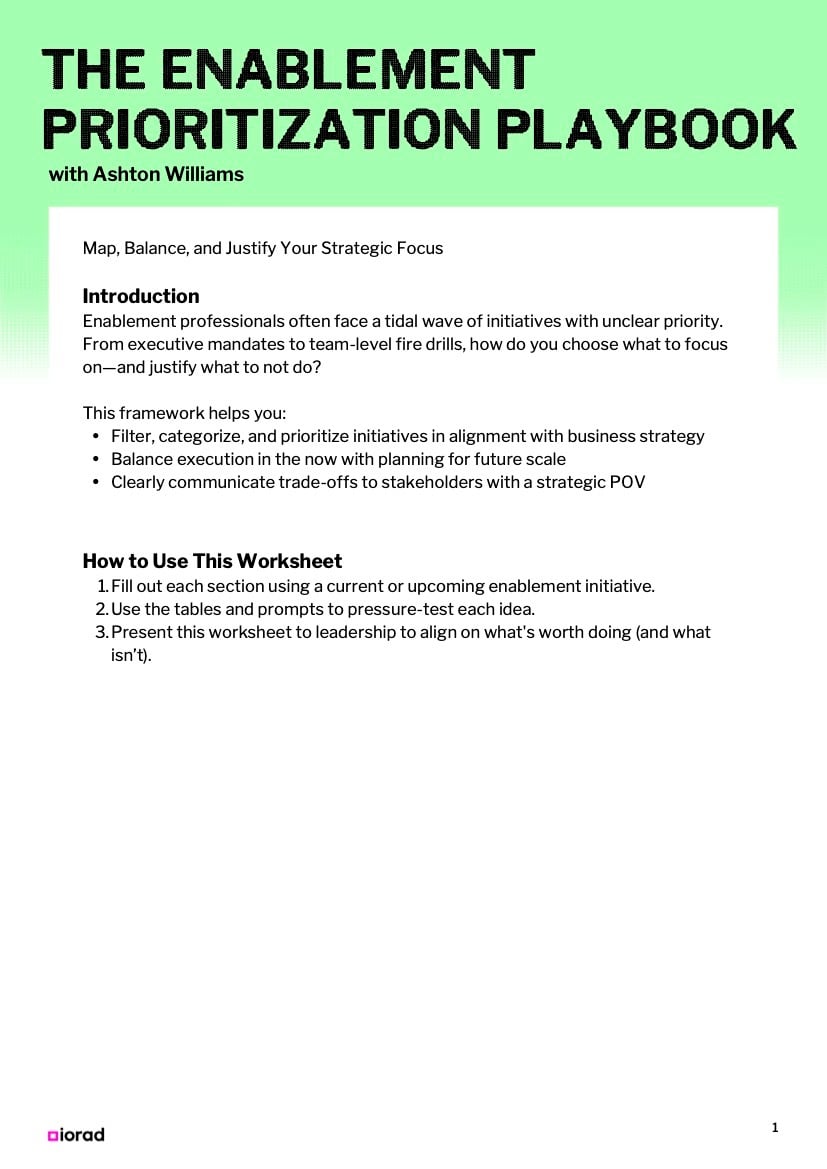
Enablement Prioritization Playbook
How to map, balance, and justify your strategic focus.